How to Select the Appropriate plug adapter for Your Needs:
Many people mistakenly use the terms "Plug Adapter" and "Power Converter" as if they mean the same thing, but this is incorrect. A Plug Adapter, also known as a Socket Adapter, is a small device that only changes the shape of your appliance’s power plug so it fits into a different country's wall outlet; it contains no moving parts, motors, or electrical components.
In contrast, a Power Converter, or Voltage Converter, serves a different purpose by converting the electrical voltage from one level to another, allowing American appliances to be used abroad or foreign appliances to be used in the US. While some Power Converters can be compact, most tend to be large and heavy.
Because Plug Adapters do not alter voltage, they are mainly used with devices that are already dual voltage, such as cell phones, laptops, certain electric shavers, hair dryers, hair straighteners, hair curlers, clock radios, portable boomboxes, iPods, iPhones, and other similar electronic devices.

Different Countries Use Different Plugs
To determine which adapter you need, it’s essential to understand their function and the problem they address. Plug adapters enable you to connect any power cord to a wall outlet with a different shape. For instance, if you bring an American appliance or electronic device to Africa, Europe, or Asia, you’ll find that it won’t fit into their outlets because their designs differ from those in the US. In the United States, we commonly use a 2-flat pin plug.
However, other countries use entirely different plug types. This is where a plug adapter becomes useful. It attaches to the end of your appliance’s power cord, allowing you to plug it into the correct outlet for the country you’re visiting. It’s important to remember that a plug adapter does NOT change voltage.
A plug adapter contains no electrical components and is not the same as a power converter; these two devices serve different purposes. Some American appliances and electronics require a separate voltage converter along with a plug adapter to function properly abroad, due to voltage differences between the US and other countries.
Step Up and Step Down Voltage Converters
Step down voltage converters are designed to reduce the electricity voltage in countries that use 220 volts, 230 volts, or 240 volts. They lower the voltage to 110 volts, allowing you to operate 110-volt electronics and appliances.
Step up voltage converters enable users to increase voltage from 100 to 220 volts. Furthermore, all the step-up converters we offer also function as step-down converters, which means they can be used both to raise voltage from 110 volts to 220 volts and to lower voltage from 220 volts to 110 volts. This type of converter is often referred to as a step-up/step-down or two-way converter.
Type and Size of the Voltage Converter
If you intend to bring electronics or appliances bought in a 110 volt country to use in a 220 volt country, you will need a “Step-Down” converter. Conversely, if you plan to use electronics or appliances purchased in a 220 volt country in a 110 volt country, a “Step-Up” converter is necessary. To figure out whether a step-up or step-down converter is appropriate, consult our global voltage guide map below. This will assist you in identifying the correct voltage for the area(s) you plan to visit.
The size of a voltage converter is determined by its wattage. Therefore, the size required depends on the devices you will be powering and their wattage consumption. We recommend choosing a voltage converter or transformer with a wattage rating 2 to 3 times higher than that of your appliance. Some appliances, such as power tools, motors, laser printers, and TVs, need a converter rated 2-3 times the appliance’s wattage because they require a power surge when turned on. This additional wattage acts as a safety measure to ensure your equipment operates correctly and the voltage converter is not damaged. Remember, using a transformer with a higher wattage rating will never harm your appliance, but selecting one that is insufficient will result in it not working properly.
50HZ / 60HZ
Hz stands for Hertz, which means cycles. One cycle per second is equal to one Hertz, or 1 Hz. In North America, electricity at 110-120 volts is produced at 60 Hz (60 cycles per second) alternating current. In many other countries, electricity at 220-240 volts is produced at 50 Hz (50 cycles per second) alternating current. This difference in cycles can cause analog clocks and timing circuits that rely on alternating current as a timing reference to display incorrect time. However, most modern electronic devices such as cell phone chargers, computers, printers, stereos, tape and CD players, DVD players, TVs and monitors are not affected by the cycle frequency difference.
110 Volts, 120 Volts, 220 Volts, 230 Volts, 240 Volts
Voltage converter specifications typically cover a range of voltages. Devices rated for 110 or 120 volts can generally function within a voltage range of 100 to 127 volts. Similarly, appliances designed for 220 or 230 volts usually operate between 220 and 240 volts. As a result, a reliable Step-Down voltage converter will enable any 110-volt device to work in countries with 220, 230, or even 240 volts. The same applies to a quality Step-Up voltage converter, which allows any 220-volt appliance to be used in countries with 110 or 120 volts.
Voltage Stabilizers or Voltage Regulators
In some countries, the voltage of the power supply can vary significantly, not just by a few volts. These fluctuations are known as “brownouts” and are quite common in certain regions. A brownout happens when the voltage drops well below the usual level, causing lights to almost go dim. For electronic devices and appliances, this situation is more harmful than a complete power outage. Often, after a brownout, the voltage suddenly surges back to normal with a strong burst of power (watts) that can damage electronics and appliances.
To protect your valuable electronics from unexpected power surges, we provide high-quality converters equipped with built-in voltage stabilizers. These voltage transformers maintain a steady output voltage regardless of input voltage fluctuations. If the voltage changes become too extreme, the converter will automatically shut off to prevent any harm to your equipment.

Voltage Outputs by Country
Now that you understand better how Plug Adapters function, there is one more important detail to clarify: some appliances and electronics are manufactured as Dual Voltage. This means these particular devices do not require power converters because they can operate on both voltage levels, and are thus called "Dual Voltage." Typically, these items are common travel essentials such as cell phones, laptops, certain hair dryers, some hair straighteners, electric shavers, electric toothbrushes, alarm clocks, and similar devices.
To confirm if your device is Dual Voltage, check the appliance itself. On the back or bottom, there should be a label, sticker, or engraving with electrical information. Look for "AC 100-240V"—if it states this, the device can operate on both voltages. However, if it reads "AC 110-120V," the device is not Dual Voltage and only supports American voltage.
To help you understand which voltage is used worldwide, in addition to the map, we have compiled a list below. You can search for the country you plan to visit. Keep in mind that this list may change over time as countries update their electrical infrastructure.
Plug Types
COUNTRY - VOLTAGE - FREQUENCY - OUTLET TYPE
(IN ORDER)
COUNTRY |
VOLTAGE |
FREQUENCY |
OUTLET TYPE |
| Afghanistan |
220V |
50
Hz |
C /
F |
| Albania |
230
V |
50
Hz |
C /
F |
| Algeria |
230
V |
50
Hz |
C /
F |
| American
Samoa |
120
V |
60
Hz |
A /
B / F / I |
| Andorra |
230
V |
50
Hz |
C /
F |
| Angola |
220
V |
50
Hz |
C |
| Anguilla |
110
V |
60
Hz |
A |
| Antigua |
230
V |
60
Hz |
A /
B |
| Argentina |
220
V |
50
Hz |
C /
I |
| Armenia |
230
V |
50
Hz |
C /
F |
| Aruba |
120
V |
60
Hz |
A /
B / F |
| Australia |
240
V |
50
Hz |
I |
| Austria |
230
V |
50
Hz |
C /
F |
| Azerbaijan |
220
V |
50
Hz |
C /
F |
| Azores |
230
V |
50
Hz |
B /
C / F |
| Bahamas |
120
V |
60
Hz |
A /
B |
| Bahrain |
230
V |
50
Hz |
G |
| Balearic
Islands |
230
V |
50
Hz |
C /
F |
| Bangladesh |
220
V |
50
Hz |
C /
D / G / K |
| Barbados |
115
V |
50
Hz |
A /
B |
| Belarus |
220
V |
50
Hz |
C /
F |
| Belgium |
230
V |
50
Hz |
E |
| Belize |
110
V / 220 V |
60
Hz |
B /
G |
| Benin |
220
V |
50
Hz |
E |
| Bermuda |
120
V |
60
Hz |
A /
B |
| Bhutan |
230
V |
50
Hz |
D /
F / G |
| Bolivia |
230
V |
50
Hz |
A /
C |
| Bosnia
& Herzegovina |
230
V |
50
Hz |
C /
F |
| Botswana |
230
V |
50
Hz |
D /
G |
| Brazil |
127
V / 220 V * |
60
Hz |
A /
B / C / I |
| Brunei |
240
V |
50
Hz |
G |
| Bulgaria |
230
V |
50
Hz |
C /
F |
| Burkina
Faso |
220
V |
50
Hz |
C /
E |
| Burundi |
220
V |
50
Hz |
C /
E |
| Cambodia |
230
V |
50
Hz |
A /
C / G |
| Cameroon |
220
V |
50
Hz |
C /
E |
| Canada |
120
V |
60
Hz |
A /
B |
| Canary
Islands |
230
V |
50
Hz |
C /
E / L |
| Cape
Verde |
230
V |
50
Hz |
C /
F |
| Cayman
Islands |
120
V |
60
Hz |
A /
B |
| Central
African Republic |
220
V |
50
Hz |
C /
E |
| Chad |
220
V |
50
Hz |
D /
E / F |
| Channel
Islands (Guernsey & Jersey) |
230
V |
50
Hz |
C /
G |
| Chile |
220
V |
50
Hz |
C /
L |
| China,
People's Republic of |
220
V |
50
Hz |
A /
C / I |
| Colombia |
110
V |
60
Hz |
A /
B |
| Comoros |
220
V |
50
Hz |
C /
E |
| Congo,
People's Rep. of |
230
V |
50
Hz |
C /
E |
| Congo,
Dem. Rep. of (formerly Zaire) |
220
V |
50
Hz |
C /
D |
| Cook
Islands |
240
V |
50
Hz |
I |
| Costa
Rica |
120
V |
60
Hz |
A /
B |
| Côte
d'Ivoire
(Ivory
Coast)
|
220
V |
50
Hz |
C /
E |
| Croatia |
230
V |
50
Hz |
C /
F |
| Cuba |
110
V / 220 V |
60
Hz |
A /
B / C / L |
| Cyprus |
230
V |
50
Hz |
G /
F** |
| Czech
Republic |
230
V |
50
Hz |
E |
| Denmark |
230
V |
50
Hz |
C /
E / K |
| Djibouti |
220
V |
50
Hz |
C /
E |
| Dominica |
230
V |
50
Hz |
D /
G |
| Dominican
Republic |
120
V |
60
Hz |
A /
B |
| East
Timor |
220
V |
50
Hz |
C /
E / F / I |
| Ecuador |
110
V |
60
Hz |
A /
B |
| Egypt |
220
V |
50
Hz |
C /
F |
| El
Salvador |
115
V |
60
Hz |
A /
B / C / D / E / F / G / I / J / L |
| Equatorial
Guinea |
220
V |
50
Hz |
C /
E |
| Eritrea |
230
V |
50
Hz |
C /
L |
| Estonia |
230
V |
50
Hz |
C /
F |
| Ethiopia |
220
V |
50
Hz |
C /
F |
| Faeroe
Islands |
230
V |
50
Hz |
C /
K |
| Falkland
Islands |
240
V |
50
Hz |
G |
| Fiji |
240
V |
50
Hz |
I |
| Finland |
230
V |
50
Hz |
C /
F |
| France |
230
V |
50
Hz |
E |
| French
Guyana |
220
V |
50
Hz |
C /
D / E |
| Gabon |
220
V |
50
Hz |
C |
| Gambia |
230
V |
50
Hz |
G |
| Gaza |
230
V |
50
Hz |
H |
| Georgia |
220
V |
50
Hz |
C /
F |
| Germany |
230
V |
50
Hz |
C /
F |
| Ghana |
230
V |
50
Hz |
D /
G |
| Gibraltar |
230
V |
50
Hz |
C /
G |
| Great
Britain (see United Kingdom) |
|
|
|
| Greenland |
230
V |
50
Hz |
C /
K |
| Grenada |
230
V |
50
Hz |
G |
| Guadeloupe |
230
V |
50
Hz |
C /
D / E |
| Guam |
110
V |
60
Hz |
A /
B |
| Guatemala |
120
V |
60
Hz |
A /
B / G / I |
| Guinea |
220
V |
50
Hz |
C /
F / K |
| Guinea-Bissau |
220
V |
50
Hz |
C |
| Guyana |
240
V |
60
Hz |
A /
B / D / G |
| Haiti |
110
V |
60
Hz |
A /
B |
| Honduras |
110
V |
60
Hz |
A /
B |
| Hong
Kong |
220
V |
50
Hz |
G |
| Hungary |
230
V |
50
Hz |
C /
F |
| Iceland |
230
V |
50
Hz |
C /
F |
| India |
230
V |
50
Hz |
C /
D / M |
| Indonesia |
230
V |
50
Hz |
C /
F |
| Iran |
230
V |
50
Hz |
C /
F |
| Iraq |
230
V |
50
Hz |
C /
D / G |
| Ireland
(Eire) |
230
V |
50
Hz |
G |
| Isle
of Man |
230
V |
50
Hz |
C /
G |
| Israel |
230
V |
50
Hz |
H /
C |
| Italy |
230
V |
50
Hz |
C /
F / L |
| Jamaica |
110
V |
50
Hz |
A /
B |
| Japan |
100
V |
50
Hz / 60 Hz ** |
A /
B |
| Jordan |
230
V |
50
Hz |
C /
D / F / G / J |
| Kenya |
240
V |
50
Hz |
G |
| Kazakhstan |
220
V |
50
Hz |
C /
F |
| Kiribati |
240
V |
50
Hz |
I |
| Korea,
North |
110
V / 220 V |
60
Hz |
A /
C |
| Korea,
South |
110V
/ 220 V |
60
Hz |
A /
B / C / F |
| Kuwait |
240
V |
50
Hz |
C /
G |
| Kyrgyzstan |
220
V |
50
Hz |
C /
F |
| Laos |
230
V |
50
Hz |
A /
B / C / E / F |
| Latvia |
230
V |
50
Hz |
C /
F |
| Lebanon |
230
V |
50
Hz |
C /
D / G |
| Lesotho |
220
V |
50
Hz |
M |
| Liberia |
120
V |
60
Hz |
A /
B |
| Libya |
127
V / 230 V |
50
Hz |
D /
F |
| Liechtenstein |
230
V |
50
Hz |
J |
| Lithuania |
230
V |
50
Hz |
C /
F |
| Luxembourg |
230
V |
50
Hz |
C /
F |
| Macau |
220
V |
50
Hz |
D /
G |
| Macedonia |
230
V |
50
Hz |
C /
F |
| Madagascar |
127
V / 220 V |
50
Hz |
C /
D / E / J / K |
| Madeira |
230
V |
50
Hz |
C /
F |
| Malawi |
230
V |
50
Hz |
G |
| Malaysia |
240
V |
50
Hz |
G |
| Maldives |
230
V |
50
Hz |
D /
G / J / K / L |
| Mali |
220
V |
50
Hz |
C /
E |
| Malta |
230
V |
50
Hz |
G |
| Martinique |
220
V |
50
Hz |
C /
D / E |
| Mauritania |
220
V |
50
Hz |
C |
| Mauritius |
230
V |
50
Hz |
C /
G |
| Mexico |
127
V |
60
Hz |
A |
| Micronesia,
Federal States of |
120
V |
60
Hz |
A /
B |
| Moldova |
230
V |
50
Hz |
C /
F |
| Monaco |
230
V |
50
Hz |
C /
D / E / F |
| Mongolia |
230
V |
50
Hz |
C /
E |
| Montenegro |
230
V |
50
Hz |
C /
F |
| Montserrat |
230
V |
60
Hz |
A /
B |
| Morocco |
220
V |
50
Hz |
C /
E |
| Mozambique |
220
V |
50
Hz |
C /
F / M |
| Myanmar
(Burma) |
230
V |
50
Hz |
C /
D / F / G |
| Namibia |
220
V |
50
Hz |
D /
M |
| Nauru |
240
V |
50
Hz |
I |
| Nepal |
230
V |
50
Hz |
C /
D / M |
| Netherlands |
230
V |
50
Hz |
C /
F |
| Netherlands
Antilles |
127
V / 220 V |
50
Hz |
A /
B / F |
| New
Caledonia |
220
V |
50
Hz |
F |
| New
Zealand |
240
V |
50
Hz |
I |
| Nicaragua |
120
V |
60
Hz |
A |
| Niger |
220
V |
50
Hz |
A /
B / C / D / E / F |
| Nigeria |
230
V |
50
Hz |
D /
G |
| Norway |
230
V |
50
Hz |
C /
F |
| Oman |
240
V |
50
Hz |
C /
G |
| Pakistan |
230
V |
50
Hz |
C /
D |
| Palau |
120
V |
60
Hz |
A /
B |
| Panama |
110
V |
60
Hz |
A /
B |
| Papua
New Guinea |
240
V |
50
Hz |
I |
| Paraguay |
220
V |
50
Hz |
C |
| Peru |
220
V |
60
Hz |
A /
B / C |
| Philippines |
220
V |
60
Hz |
A /
B / C |
| Poland |
230
V |
50
Hz |
C /
E |
| Portugal |
230
V |
50
Hz |
C /
F |
| Puerto
Rico |
120
V |
60
Hz |
A /
B |
| Qatar |
240
V |
50
Hz |
D /
G |
| Reunion
Island |
230
V |
50
Hz |
E |
| Romania |
230
V |
50
Hz |
C /
F |
| Russian
Federation |
220
V |
50
Hz |
C /
F |
| Rwanda |
230
V |
50
Hz |
C /
J |
| St.
Kitts and Nevis |
230
V |
60
Hz |
D /
G |
| St.
Lucia |
230
V |
50
Hz |
G |
| St.
Vincent |
230
V |
50
Hz |
A /
C / E / G / I / K |
| Samoa |
230
V |
50
Hz |
I |
| San
Marino |
230
V |
50
Hz |
F /
L |
| Saudi
Arabia |
110
V / 220 V *** |
60
Hz |
A /
B / C / G |
| Senegal |
230
V |
50
Hz |
C /
D / E / K |
| Serbia |
230
V |
50
Hz |
C /
F |
| Seychelles |
240
V |
50
Hz |
G |
| Sierra
Leone |
230
V |
50
Hz |
D /
G |
| Singapore |
230
V |
50
Hz |
G |
| Slovakia |
230
V |
50
Hz |
E |
| Slovenia |
230
V |
50
Hz |
C /
F |
| Somalia |
220
V |
50
Hz |
C |
| South
Africa |
230
V |
50
Hz |
D /
M |
| Spain |
230
V |
50
Hz |
C /
F |
| Sri
Lanka |
230
V |
50
Hz |
D /
G / M |
| Sudan |
230
V |
50
Hz |
C /
D |
| Suriname |
127
V |
60
Hz |
C /
F |
| Swaziland |
230
V |
50
Hz |
M |
| Sweden |
230
V |
50
Hz |
C /
F |
| Switzerland |
230
V |
50
Hz |
J |
| Syria |
220
V |
50
Hz |
C /
E / L |
| Tahiti |
220
V |
50
Hz / 60 Hz |
C /
E |
| Tajikistan |
220
V |
50
Hz |
C /
F |
| Taiwan |
110
V |
60
Hz |
A /
B |
| Tanzania |
230
V |
50
Hz |
D /
G |
| Thailand |
220
V |
50
Hz |
A /
B / C |
| Togo |
220
V |
50
Hz |
C |
| Tonga |
240
V |
50
Hz |
I |
| Trinidad
& Tobago |
115
V |
60
Hz |
A /
B |
| Tunisia |
230
V |
50
Hz |
C /
E |
| Turkey |
230
V |
50
Hz |
C /
F |
| Turkmenistan |
220
V |
50
Hz |
C /
F |
| Uganda |
240
V |
50
Hz |
G |
| Ukraine |
230
V |
50
Hz |
C /
F |
| United
Arab Emirates |
240
V |
50
Hz |
G |
| United
Kingdom |
230
V |
50
Hz |
G |
| United
States of America |
120
V |
60
Hz |
A /
B |
| Uruguay |
220
V |
50
Hz |
C /
F / I / L |
| Uzbekistan |
220
V |
50
Hz |
C /
F |
| Venezuela |
120
V |
60
Hz |
A /
B |
| Vietnam |
220
V |
50
Hz |
A /
C / G |
| Virgin
Islands |
110
V |
60
Hz |
A /
B |
| Yemen |
230
V |
50
Hz |
A /
D / G |
| Zambia |
230
V |
50
Hz |
C /
D / G |
| Zimbabwe |
240
V |
50
Hz |
D /
G |
-
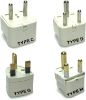 Price: $14.99
-
International Worldwide Plug Adapters Type A, B, C, D, E, F, G, H, I, J, L, M
 Price: $1.99
-
 Price: $2.49
-
 Price: $2.29
-
 Price: $24.95
-
 Price: $29.95
-
 Price: $28.95
-
 Price: $34.90
-
 Price: $59.99
-
 Price: $79.99
-
 Price: $89.99
-
 Price: $109.99
-
 Price: $21.95
-
 Price: $23.95
-
 Price: $20.95
-
 Price: $9.95